
Legislative Priorities
Our 2026 Care Agenda

In the 2026 Maryland Legislative Session, our coalition advanced legislation to make hospitals safer, support individuals living with dementia, and improve conditions for home care and nursing home workers.
This year brought a major victory for hospital staff and patients: after three years of advocacy, the Safe Staffing Act passed! We also helped pass legislation that will better equip healthcare providers to care for Marylanders living with dementia. Three of our policy priorities did not pass this year, but we remain committed to improving conditions for long-term care workers and will return next session to continue the fight!
Legislation that passed:
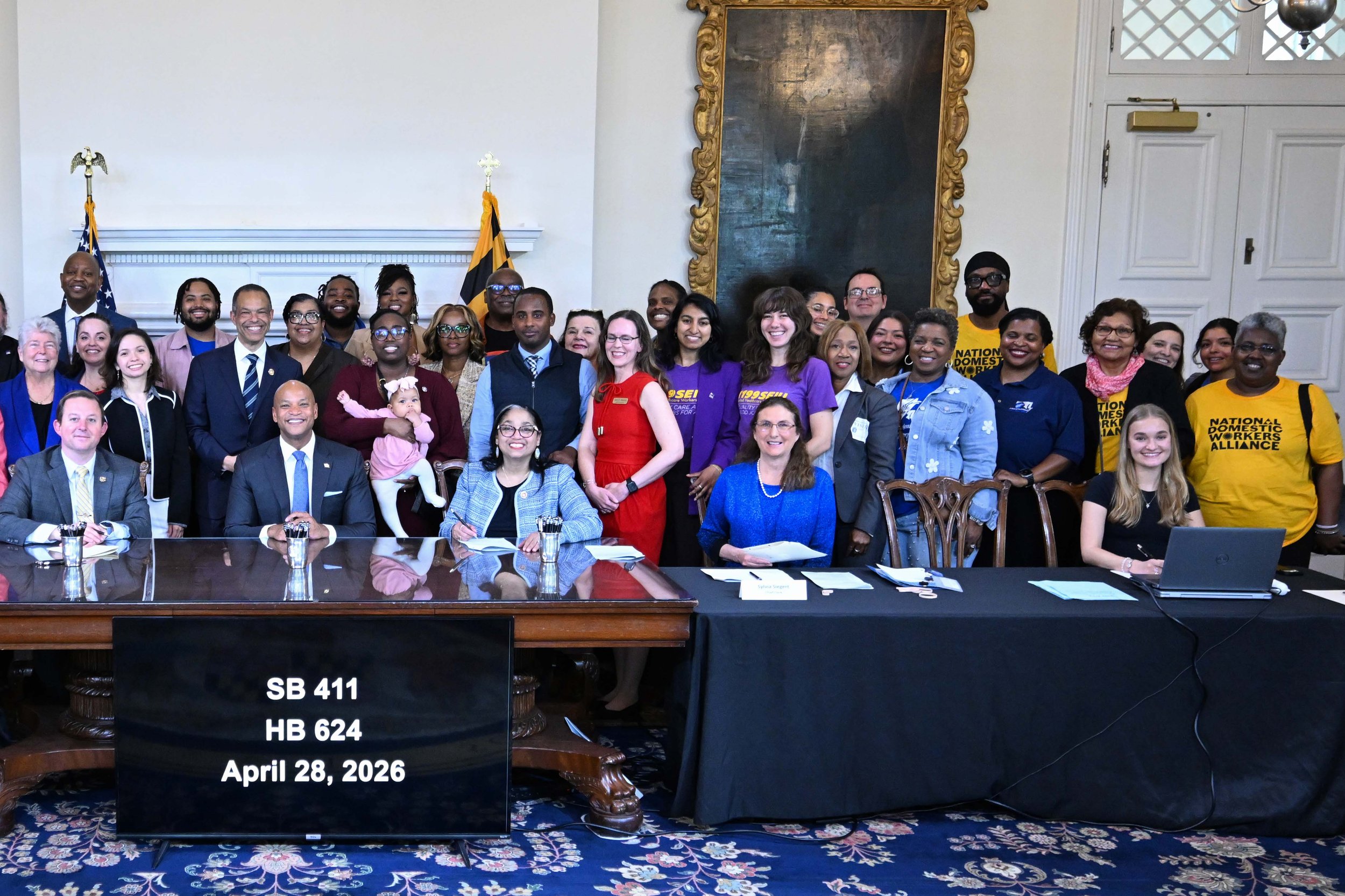
Safe Staffing Act of 2026 (HB 624 / SB 411)
Sponsors: Delegate Jennifer White Holland and Senator Malcolm Augustine
Maryland hospitals face critical staffing shortages that lead to worker burnout, long ER wait times, and compromised patient care. The Safe Staffing Act requires Maryland hospitals to establish safe staffing committees to drive solutions to staffing and safety issues. Direct care workers and patients will sit on committees and create annual staffing plans.
Dementia Services and Brain Health Program and Clinical Toolkit (HB 446)
Sponsors: Delegate Ashanti Martinez and Senator Hayes
Dementia is one of Maryland's fastest-growing public health challenges, impacting thousands and straining our healthcare system. This legislation will equip healthcare providers with resources on early detection, diagnosis, and care planning, and build sustainable statewide risk reduction infrastructure.
Legislation that did not pass:
Nursing Home Staffing Crisis Funding Act of 2026 (HB 1414/ SB 663)
Sponsor: Delegate Ashanti Martinez and Senator Benjamin Kramer
This bill improves nursing homes’ financial transparency and ensures that 75% of nursing home revenue is spent on resident care and wages and benefits for direct care workers. By directing resources toward frontline care, this legislation will improve safety, quality of care, and quality of life for residents.
Office of Health Care Quality Stakeholder Advisory Council (SB 240)
Sponsors: Delegate Teresa Woorman and Senator Karen Lewis Young
Maryland faces significant healthcare quality challenges, including the longest ER wait times in the country, gaps in annual nursing home inspections, and an alarming increase in medical errors. This bill will establish a Stakeholder Advisory Council for the Office of Health Care Quality (OHCQ) to provide constructive feedback and advice.
Minimum Home Care Wage and Paid Sick Leave (HB 1129)
Sponsors: Delegate Lopez
This bill would take a graduated approach to create a $20 wage floor for all personal care aides employed by Medicaid-funded residential service agencies (RSAs). This bill also extends paid sick leave to all personal care aides, regardless of the size of their RSA, with 24 hours available upfront, and the ability to accrue additional time in line with Maryland’s Earned Safe and Sick Leave law.